Welcome to NoodiMag, the container for all my noodling on noodles, pastas, and all related topics.
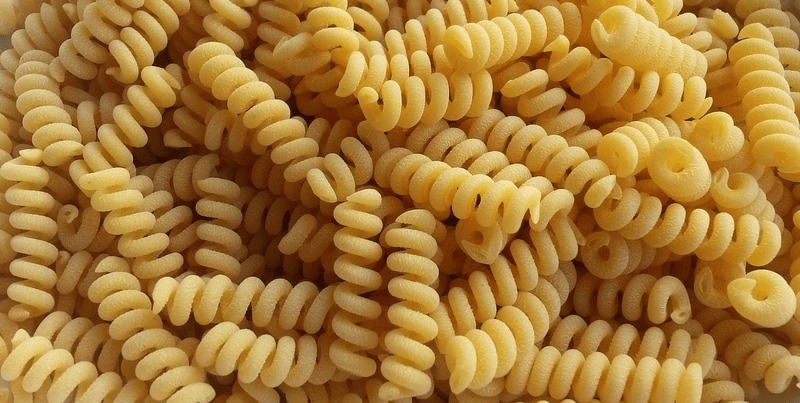
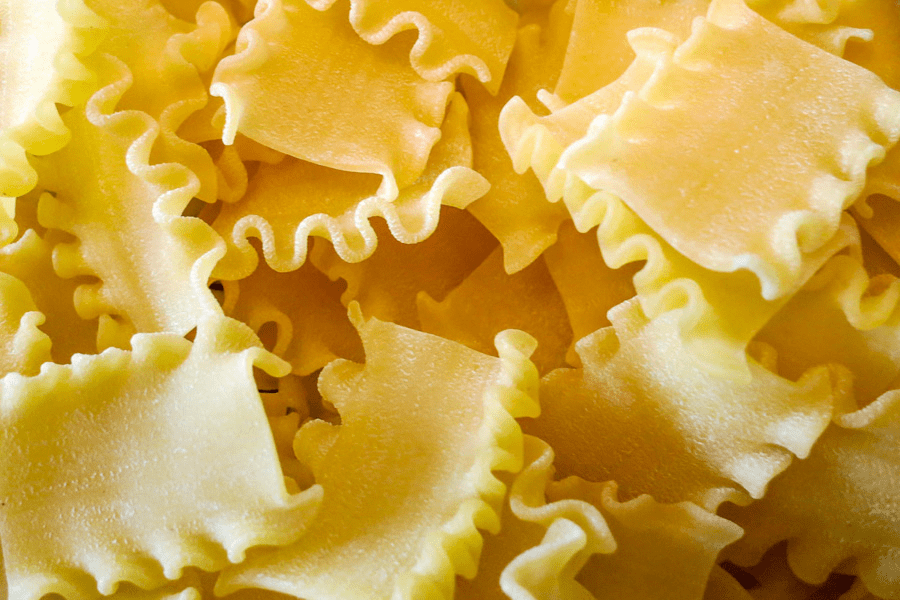
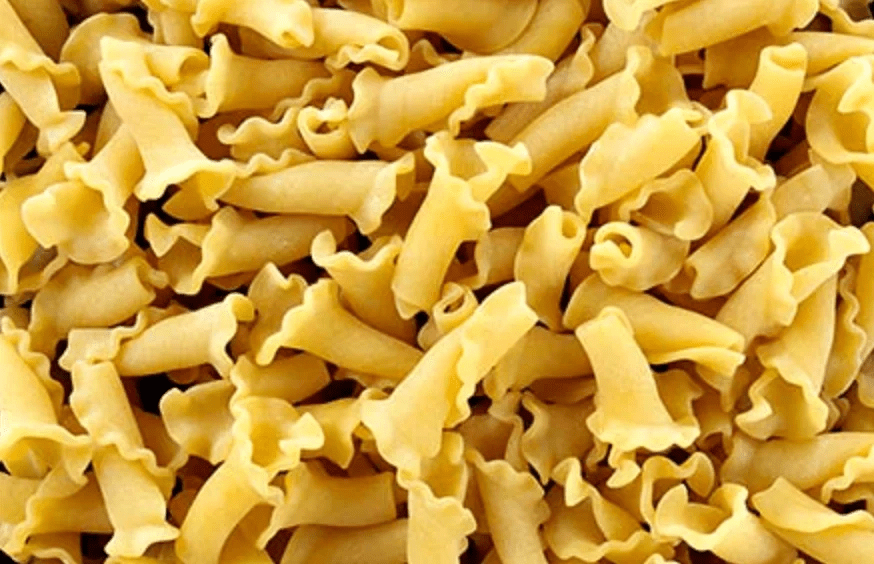
Pasta Shapes Consumed: Pierogy; Gemelli; Lasagne (no ruffled edges); Miniature Shells; Round Ravioli; Fettucine
Total Pasta Shapes To Date: 14
The Appetizer:
I feel as though I am stagnating in the quest to have as many pastas and noodles as possible. My most loyal readers will notice a lot of repetition, and only a few new shapes each fortnight. I can’t quite tell if 14 varieties in six weeks is a lot. It’s probably more than average. Is it a sustainable rate if I’m to keep this up all year? Also hard to tell. In the most romantic part of my heart, I want each pasta dish I eat to be a new type, but this is not the reality of groceries and cooking in the world as it is. In the most neurotic part of my heart I want to get through every type by the end of the year, but there are hundreds upon hundreds, and I do actually like to eat other foods. As mentioned in Volume 2, I have to remind myself that this is not a goal of rigidity and endurance, but of pleasure and experience. The real goal, I think, is a deeper appreciation for the craft and for the subtle changes that make a big difference. For instance, this week I’ve eaten both pierogy and ravioli. You could argue that these are more or less the same thing with different fillings, and you would be wrong. In comparing these two dishes, I can appreciate just how much the method of sealing the dumpling alters the experience. I also have been reading about how much the type and quality of wheat used can alter the texture, and I’m fairly certain these two products use different wheats, despite both simply listing “wheat flour” as an ingredient. These are things I’ll be looking out for as I continue this journey. I’m starting to get caught up in the intellectual side of things. Maybe it’s all the Aquarian energy lately. I’ve learned just enough in my research that it’s all very exciting, and a little overwhelming, and it’s hard to stay focused. There’s so many ideas and connections and inspirations, it’s difficult not to just end up hollering incoherently about it until I wear myself out. Just as with the embodied side, this is an exercise in pacing myself. Welcome to my attempt to shift my hyperfixation process. Here’s a taste of what I’ve been learning…
The Entree:
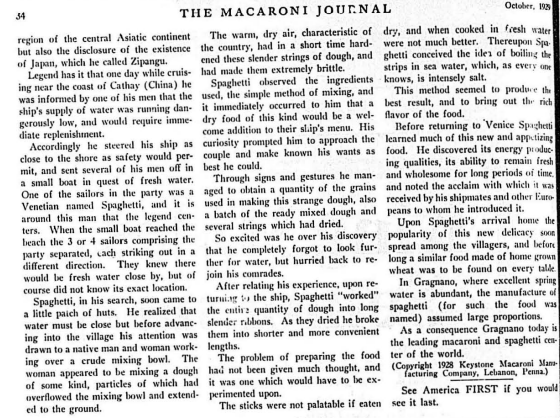
After last issue’s ponderings on pad Thai noodles, known in Thai as Kuai tiao (ก๋วยเตี๋ยว) and based on a noodle of Chinese origin transliterated as guotiao and also called shahe fen (“fen” being the Mandarin for noodles made of starches besides wheat), I began to really wonder in earnest about our terminology, its etymologies, what is being communicated by using one term over another, whether we could be using the Italian term “pasta” and the Mandarin term “mian” interchangeably, as they both mean “noodles made with wheat.” At the start of these particular ponderings, I was operating under the impression that all preparations of ground wheat, water, salt, and maybe egg formed into various shapes originated in China and were brought to Europe by Marco Polo in 1295. I found, though, that this is a myth created by advertisers in 1929 and resented by Italians. The story was first published in Macaroni Journal, the trade magazine of the National Pasta Association (formerly the National Macaroni Manufacturer’s Association), which went out of print in 1984 and the haphazard archival scans of which I have been reading and immensely enjoying. (Expect more on this window into a niche community at a later date.)
Instead, the true origins of pasta, mian, and other similar foods are murky, ancient, and completely independent of one another. It appears that wherever wheat is grown, humans have ground its fruit, combined it with water, and shaped it into something delightful. The oldest known archaeological evidence of noodles was found in a 4,000 year old ceramic bowl excavated in Qinhai, China. References to pastas and noodles are found in surviving texts from Ancient Rome and Greece, including a Greek myth wherein the muse Thalia inspires Macareo to build an extruder and make pasta for poets. In the 9th Century AD, Arab-Spanish entertainers sang songs extolling the virtues and elegance of noodles. There are many more examples. I could very easily get lost in the sauce, so to speak, on the ancient tradition of loving pasta and noodles, and I will over time. The point I mean to make here today is that the communities around the Mediterranean Basin already had many, many variations on what we now call pasta by the time Marco Polo made his expeditions to China. What actually happened when Marco Polo ventured to China is this: he saw their noodles and he wrote in his travel log whatever the Medieval Italian equivalent is of, “Holy shit, they have lagane here, too!!!” At the time, “lagane” was a common term in Europe for everything that we might call pasta or noodles today. This comes from the Greek “laganon,” referring to strips of dough made of flour and water, and would become “lasagne.” “Macaroni” was also in use around this time, as well as a number of other terms in local languages and dialects. Later, in the Renaissance period, when it became more common to purchase dried pasta in the market than make it at home, it was all called “vermicelli.” In the 18th and 19th Centuries, which saw the unification of Italy, mass migration from Italy to the United States, and the dawn of mass manufacturing as never seen before, it all came to be known as “macaroni.” It is only very recently– as in only since the mid-20th Century– that “pasta” has become the common term for all of these culinary preparations. In Italy, the legal term is “paste alimentari,” while in the United States, our regulations around these products are largely from the early 20th Century, and so still refer to “macaroni products.” I’m still learning how and why all these language shifts happened, but the growing uniformity across some geography and not others has much to do with imperialism, nationalism, and globalization, and we will continue to dig into all of that.
The Dessert:
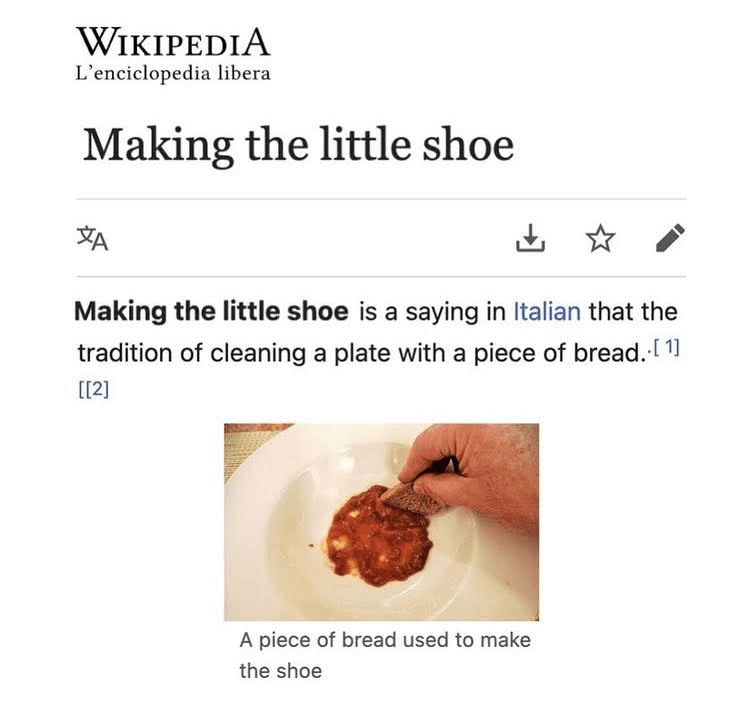
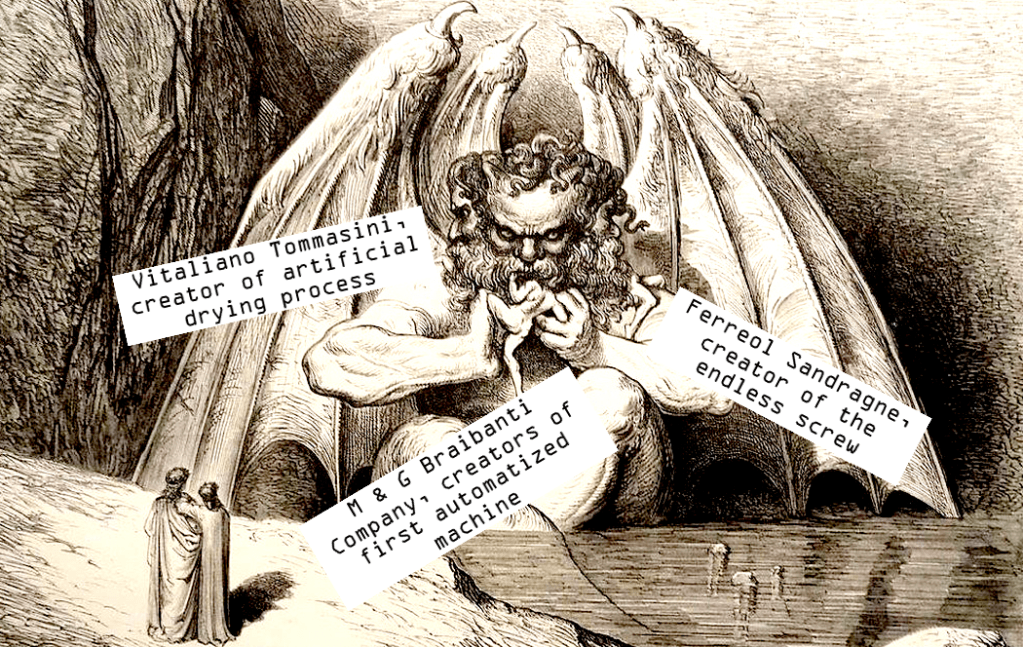
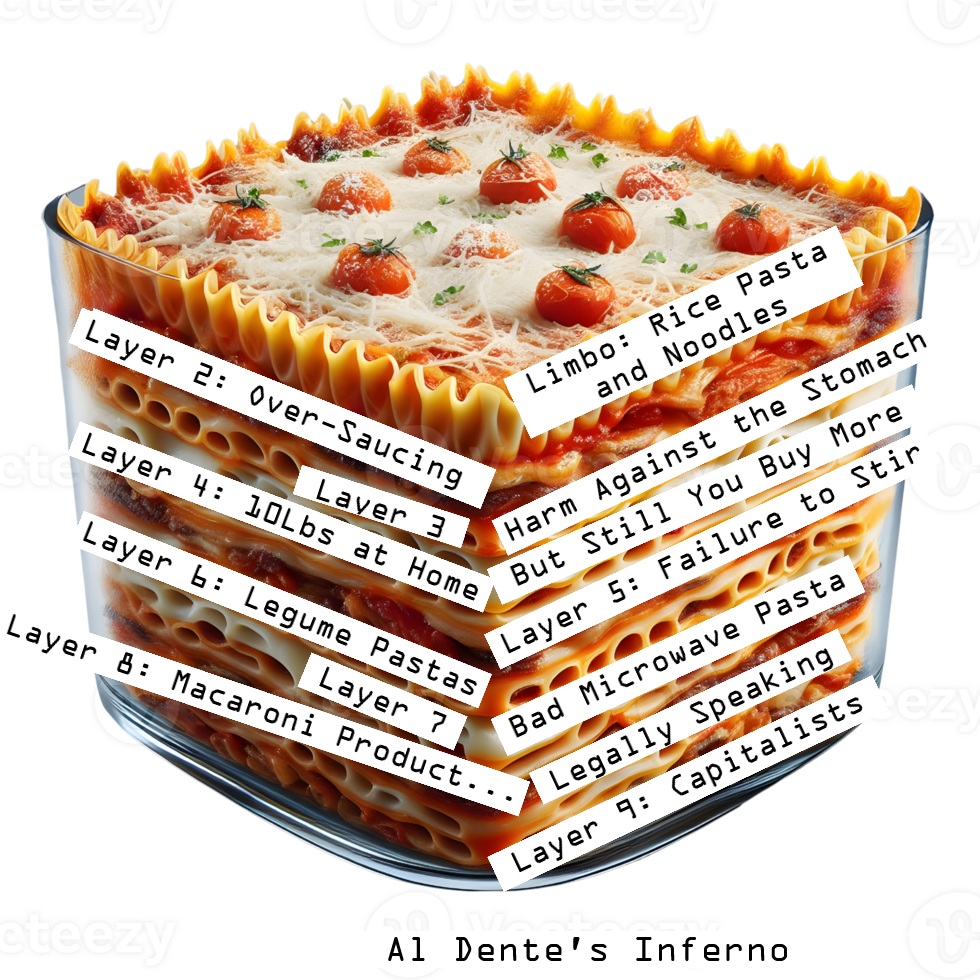
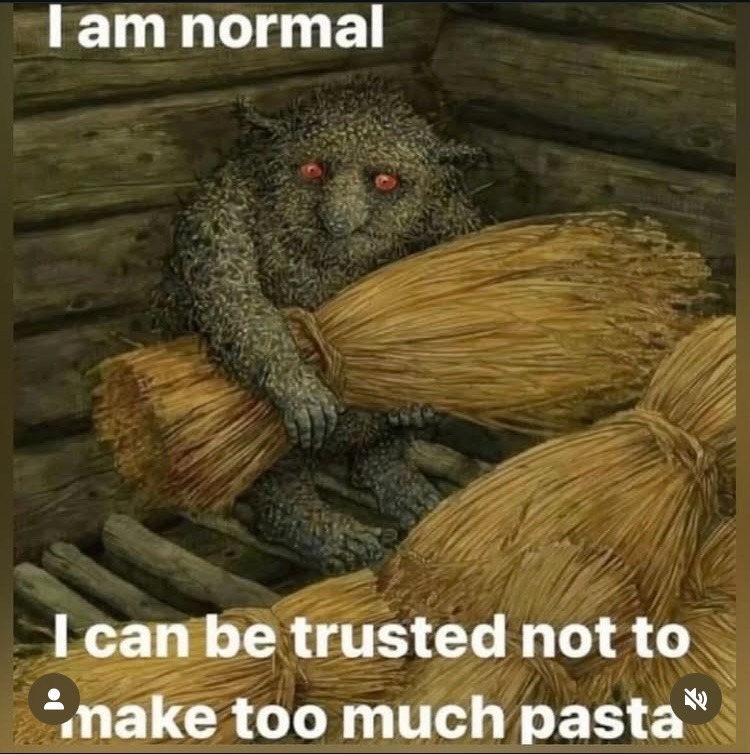
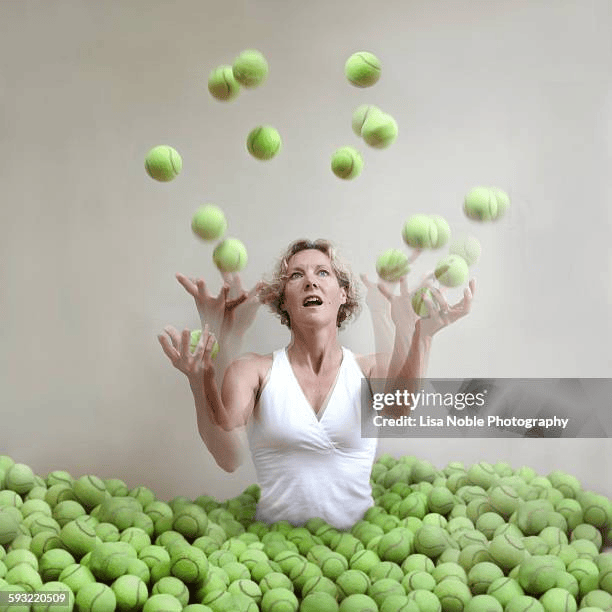
I’ll leave you with memes today…
Thanks for reading! Maybe next time will be better.
Works Cited:
Montanari, M. (2021). A Short History of Spaghetti with Tomato Sauce: The Unbelievable True Story of the World’s Most Beloved Dish. (G. Conti, Trans.) Europa Editions.
Shelke, K. (2016). Pasta and Noodles: A Global History. Reaktion Books Ltd.
The schema for what we mean by “eat as many pastas as I can” continues to be built as we go. I have had a few discussions now with my companion in this goal about what can count towards our final numbers. Did we mean shapes? Did we mean types? Did we mean strictly unleavened dough made of wheat flour mixed with water or eggs? Or do we mean the more expansive definition that includes gluten-free options made of rice and legumes? Do we mean Italian noodles or do all the noodles of the world count? Do zoodles count at all? Where does gnocchi fit? Much to consider! As someone with a degree in Classification and Categories, I am absolutely considering it daily.
At issue in this issue is whether the rice noodles in my pad Thai count towards the goal, and if so, how. Do they count for the linguine shape? Or does the fact of their holding sauce differently and having a different texture and a different origin make them a separate entry from the true linguine I will undoubtedly have later in the year?
Across the last issue and this one, I count three different macaronis: one made with rice, two made with wheat, all distinct sizes and shapes. This is another issue, because there are many noodle shapes we might call “elbow macaroni,” and technically many things legally fall under the category “macaroni product.” It’s all very fuzzy, as all categories are, which is lucky for me and my secondary goal of writing about pastas and noodles with regularity. We will not be getting to the bottom of this! And that’s part of the fun.
The Entree:
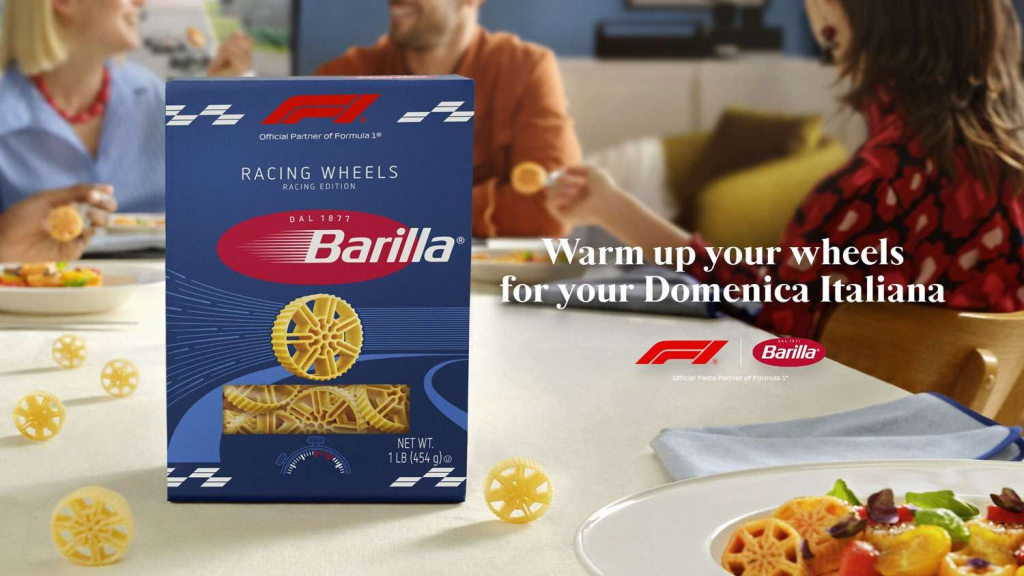
I already have to admit that I have led my beautiful readers astray. In the last issue, I referred to Barilla as “a pasta brand that we do not fuck with.” I said that I may explain the reasons in a future issue, and as I began to search for sources for those reasons, I realized that I perhaps overstated how much we do not fuck with Barilla.
For several years now, I have refused to purchase Barilla products, even though they are often the least expensive option and offer the widest variety of shapes, because in 2013 chairman and member of the Barilla family, Guido Barilla, made some comments about what family should look like that involved homophobia and some very traditionalist ideas about women’s roles. He said that if we were offended, we could simply eat another pasta. The other major pasta brands, of course, jumped on this and posted on social media about how much they like it when the gays purchase their enriched macaroni products. Way back in 2013, we were a valuable market!
I am on record on this very blog as saying, “I love a boycott and will hold a grudge against a corporation for the rest of my life,” so I did not bother to keep up with this issue and learn that Guido very quickly apologized and promised to meet with “representatives of the groups that best represent the evolution of the family, including those who have been offended by my words.”
In 2018, Barilla sponsored the launch of Openly, a global digital news platform operated by the Reuters Foundation focused on LGBT+ issues. They announced this sponsorship in the same press release where they announced they would employ and train refugees at their plants throughout Europe, with the goal of employing upwards of 75 refugees over five years. Their Chief Diversity Officer had some really nice things to say in the release.
I also read their 2022 and 2024 Sustainability Reports. They met their goals for employing and training refugees early, and so they launched a new mentorship program specifically for refugee women. They also were ranked one of the best places to work for LGBTQ+ people in 2022. They say they do their best to source cane sugar, cocoa, and materials for technology in ethical ways. They have Animal Welfare Guidelines. They’ve got Climate Risk Assessments and related goals. They have a Disability Inclusion Roadmap and they’re getting into Design for All. They claim to work well with trade unions, to support the farming communities located close to their plants, to have some level of transparency about accidents in their workplaces, and more.
I don’t know, man! They’re saying all the right things now! It’s all in corporate buzzwords, but I am finding it hard to be a total and complete hater at this point.
I will still maintain my grudge, though. They are, after all, still a multinational corporation owned by an even larger corporation owned by an even larger multinational conglomerate. It does appear, though, that… they may be moderately less evil than others among their ilk.
Below you can see their corporate ownership through a diagram inspired by a plate of spaghetti and meatballs. It’s not great! There’s a lot of construction and chemical manufacturing going on! But at least I didn’t find any defense contractors??
(Small correction: Pan di Stelle is also a Barilla Group brand that used to be under Mulino Bianco, but became its own brand in 2007. The diagram does not reflect this. Or the continued existence of Catelli, a Canadian pasta brand owned by Barilla Group.)
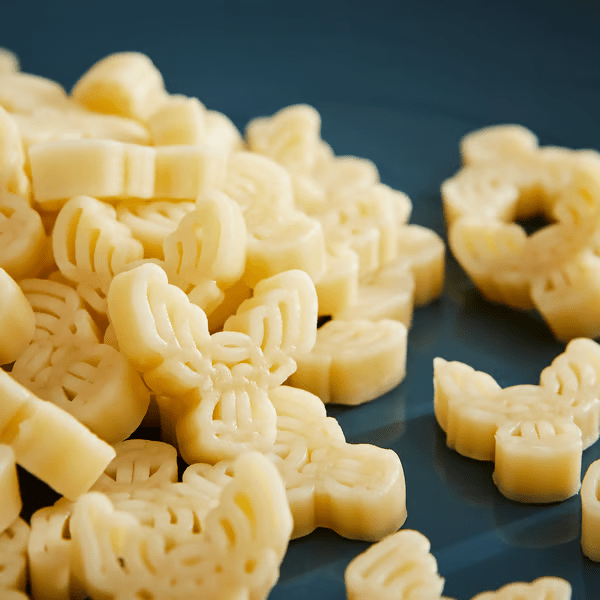
So, last time I was at the grocery store, I gave Barilla $2.00 for their limited edition snowflake-shaped pasta. I still had four pounds of pasta from Costco in the pantry, but it’s limited edition. They have a heart-shaped limited edition pasta as well, which I may get next time. I have not tried the snowflakes yet, but they will be covered in a future issue, along with the ethics of the other major pasta brands.
The Dessert:
This issue’s dessert is actually about a dessert.
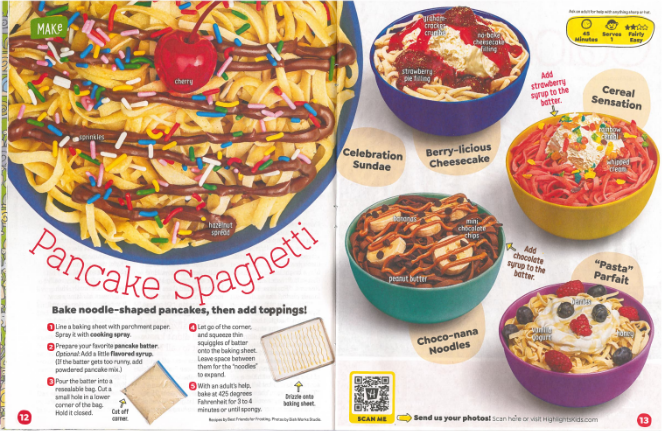
I’m thinking about spaghettieis. Spaghettieis is a dessert invented by second-generation Italian-German, Dario Fontanella, in Baden-Wuerttenberg, Germany in 1969. It’s ice cream that looks like spaghetti! It’s inspired by Mont Blanc, a French dessert where a chestnut puree is put through a Spaetzle press and topped with whipped cream, so it looks like if spaghetti was a mountain, namely Mont Blanc. (Spaetzle is a pasta specific to Central Europe. We’ll talk more about it another time.) Dario decided to make something that sounded good, so he put vanilla gelato through a Spaetzle press and then put strawberry sauce and shaved white chocolate on top. It looks like spaghetti!!
Many, many years ago, before Guido even put his foot in his mouth, I had the chance to eat spaghettieis in its place of origin. Instead, I just got a classic chocolate cone. Don’t get me wrong, that was still one of the best ice cream cones I’ve ever had, but I now understand 17 year old me was making bad choices in ways I couldn’t have fathomed at the time. It doesn’t appear that any ice cream or gelato shops near me offer this treat. How long do I fixate on it before I have to get a Spaetzle press and make it myself?
Thanks for reading! Maybe next time will be better.
Works Cited:
Barilla. (2018, September 27). Barilla commits to refugee training and sponsors new LGBT+ news platform as part of ongoing diversity and inclusion journey.
Barilla. (2022). The Joy of Food for a Better Life: Sustainability Report 2022.
Barilla. (2024). The Joy of Food for a Better Life: Sustainability Report 2024.
Edelbaum, S. (2023, August 12). Spaghettieis: a trick ice cream sundae. BBC.
McCoy, K. (2013, September 30). Barilla exec apologizes for remarks on gays. USA Today.
Welcome to NoodiMag, the container for all my noodling on noodles, pastas, and all related topics. This is volume 2 because, way back in November 2022, I wrote one singular joke version of this idea, sent only to my wife. I’ve been talking about doing this niche newsletter, and actually sending it outside my household, and calling it NoodiMag for over a year now, and I finally have the motivation to really do it, because for 2026 a friend and I have set a mutual goal of eating as many different pastas as we can, inspired by this video. I’m excited for what this particular part of the future holds. If the First Summer of Soft Serve taught me anything, there are good things coming. So, here we go…
Am I really eating every pasta I can? If you ask the most literal part of my brain, the answer is no. I was at a diner one night, and I noticed that they had Fried Ravioli on the menu. I thought to myself, “I like Fried Ravioli, and that’s a pasta. I should get that. For the goal.” Did I get it? No! I got a sandwich. It was a really good sandwich, except it cut up my mouth. (Why have we all accepted having our mouths cut up on an overstuffed sandwich on toasted bread? My next stupid campaign will be to put an end to this.) And at the grocery a few days later, I walked right by the pasta aisle. Then I started to turn back. For to get another pasta shape. But then I thought to myself, “I have six pounds of pasta from Costco at home. I can wait to get another pasta.” Another night I was having lemon drop martinis with a friend at a restaurant with lots of pasta on the menu. I could’ve gotten some of them without even leaving off key ingredients to make it vegetarian. But I ate a salad and fancy cheese instead and they were really delicious. So, that’s three times I passed up pasta that I could have had. Except that I didn’t want to, so could I really have? I suppose these moments helped to define the goal. This is about exploration and enjoyment. This is not about rigidity or purity. Though, over a week later, I am still thinking about the Fried Ravioli That Wasn’t. I’ve learned my lesson there.
The Entree:
I am convinced that eating a slightly-too-large bowl of pasta, watching an episode of TV, and then having a big, huge nap is an effective home remedy for chronic pain, chronic fatigue, and, possibly, whatever else might ail you. At least whatever else might ail me.
Frequently, when I am having a flare of my chronic illness, I will put this to the test. I will make just a little too much of the Basic Pasta Meal: whatever pasta shape I grab first out of the pantry, vegetarian ground “be’f”, marinara sauce from a jar, and mozzarella and/or parmesan cheese. Sometimes I put red pepper flakes in it, or extra garlic, or fresh tomatoes if I have them. Probably we all have had some version of this in heavy rotation for our entire lives. It wasn’t vegetarian when I was a kid, and it didn’t include the cheese, or any of the extras, but it’s always been the same basic concept. It’s a classic for a reason.
I eat it until I’m just a little too full. I watch an episode of a hour-long network TV drama, and then I go to sleep. I always wake up feeling so much better.
This is what I did on the first day of Greg’s New Year. I was hit with a wave of exhaustion and pain in the early evening. I thought maybe I was sick. I didn’t even stay up that late or consume any substances for New Year’s Eve! My wife made me Basic Pasta Meal. I dozed on the couch to one and half episodes of Gilmore Girls. Then, I went to bed very early. In the morning, I felt totally fine. I mean, as fine as you can be while having a chronic illness flare.
As it turns out, They, the Scientists, are finally starting to research this. Or consider researching it.
In May of 2025, a group of scientists published a study protocol in Trials, a leading journal that publishes designs for randomized controlled trials in health, with the goal of improving trial design. The hypothesis of this would-be study is that carbohydrate intake shortly before sleeping may improve sleep by increasing the availability of tryptophan, which is crucial to serotonin production, which in turn modulates the sleep-wake cycle. It appears so far that this study has not actually happened yet. And it also appears that this study protocol and potential actual study is/will be funded by Barilla, a pasta brand that we do not fuck with, for reasons I may explain another time (Lotti et al, 2025). Now, they say that the funding source won’t affect the results, but they always say that and… I’m skeptical. Barilla’s got a concerted interest in combating “carbophobia” as they call it. I do believe this to be a noble cause, though, and so we have a case of strange bedfellows.
Research also shows that carbohydrate consumption is essential to restoring muscle glycogen, the fuel source for our muscles during exercise. During physical activity, muscle glycogen is broken down and oxidized into the molecules needed for muscle contraction. Our glycogen stores need to be replenished in order to perform physical activity again (Murray & Rosenbloom, 2018). I’m not an athlete, but sometimes my body feels like I ran a marathon after doing a normal day.
Is this scientific backing for my pasta-based home remedy? Perhaps. It is most certainly your invitation to join me in this experiment. Give this protocol a try the next time you feel like shit, and let me know how it goes.
The Dessert:
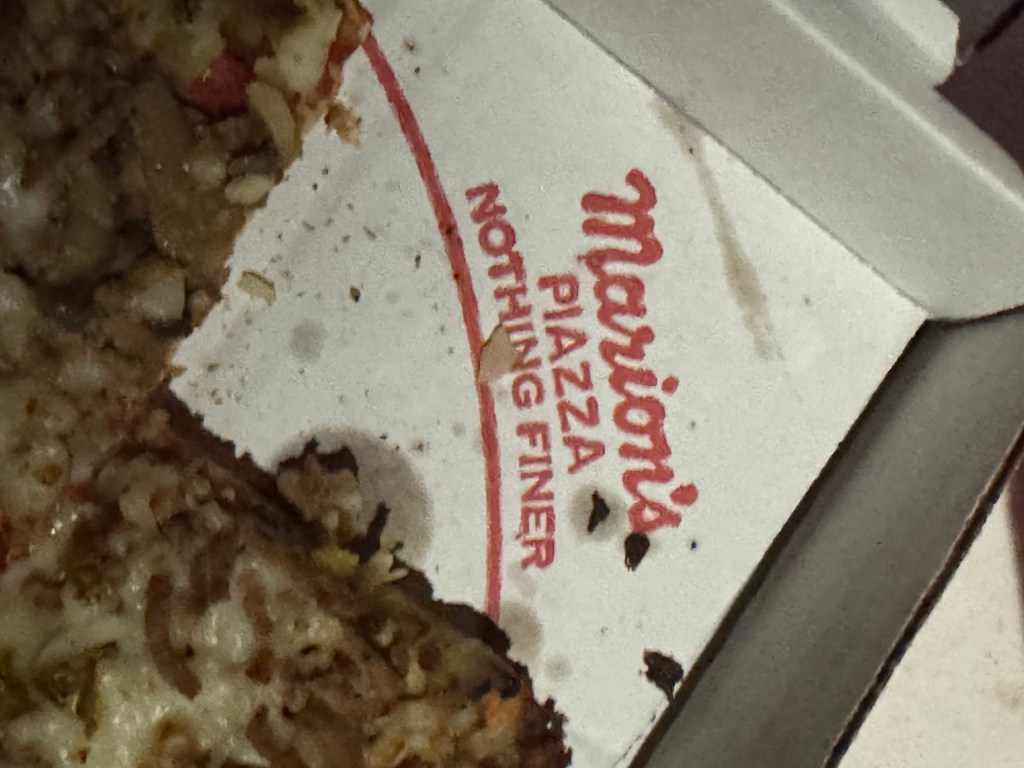
This is the meme a coworker caught me looking at instead of working:
She asked, “That sketti??”
Pretty apropos. when the coworker thinks ur working but really you’re looking at memes of spaghetti
Thanks for reading! Maybe next time will be better.
Kurt Vonnegut’s ouroboros in Breakfast of Champions
I chanted Torah for the first time yesterday. This is a big deal in and of itself! I’m finally, at 31 years old, a bat mitzvah. Or a b’nai mitzvah? The gender part isn’t that important here; the point is that I’ve gotten to do the thing that, to some, makes me officially an accountable person in my Jewish community. Someone who is responsible for their own actions, who should be held to account for their mistakes.
Obviously I’ve been striving towards accountability (with varying degrees of success) for many years. And obviously my peers who are whole adults that don’t know how to read the Torah are also responsible for themselves. But, having gone through the process of learning to read and chant the Torah, I can appreciate this as a rite of passage that proves you are ready to carry your own self through the world.
Here is the most sacred object in our tradition. Here is one of the most sacred tasks. Here is the difficult work of parsing out multiple layers of ancient symbols, two thirds of which disappear when you look at the actual scroll, replaced with embellishments that make familiar letters turn unfamiliar again. In turning the symbols into sounds, one joins a millennia old oral tradition that started in the din of marketplaces, blending the divine and the mundane. And you’ve studied it a bunch, and you’ve practiced it until you can say it almost completely from memory, and now you have to do it in front of a bunch of people, so there’s the interpersonal aspect, and the performance anxiety aspect, and the self-confidence aspect, along with all that ancient, traditional, spiritual stuff.
Personally, I love the Torah. Not her content necessarily, but all that she represents. When I hold her I feel like I’m holding a precious baby who is also an ancient ancestor. That’s kind of what’s happening, is it not? Even to many secular Jews, the Torah represents the unbroken passage of Jewish knowledge from generation to generation, the connection to the ancestors and their wisdom, something holy even in the absence of belief in g-d. The arguing about her, the critiquing and criticizing her is a holy act. Not being so sure that this text is the best one for the World’s Oldest Book Club is its own kind of reverence. It is no small thing to learn her ways.
So, yesterday was Simchat Torah. This is the day that, three weeks into the new year, we complete our Torah reading cycle and begin it anew. We unroll the Torah, completely if you can, in the most stressful group project ever. We’ve got this sacred and fragile object. We’ve got a bunch of people, including myself, who suddenly forget left from right and how to follow directions. But once you get her unrolled as far as you can, you can see the whole story, or most of it, laid out before you at once. There are places where the text becomes a concrete poem, markers for significant moments in the journey. And because the Torah cycle is linked to the Hebrew calendar, these can become markers of significant moments of our lives.
We read the very last verses of Devarim, or Deuteronomy, where Moses dies and it is proclaimed that there will never be another prophet as great as him, and we immediately launch into Bereshit, or Genesis, where Creation begins again with the separation of light and dark, day and night. We are always in a state of becoming. Endings and new beginnings do not unfold all at once. And endings and new beginnings are one in the same.
So, I got to chant these last verses of Devarim and these first verses of Bereshit. This alone is an extra cool piece of Torah to have for your first aliyah*! And I’m here to tell you the extra layers of why it was significant for me.
Three years ago on Simchat Torah, I was still in the process of converting. To be clear, I believe I have always been Jewish, but that, for reasons I still don’t quite understand, g-d felt the need to make me learn and then unlearn Protestant prudishness and a self-destructive work ethic. This is a story for another time. For our story today, it’s important to know that three years ago I was yearning to hold that Torah but couldn’t!! I was so envious of the people holding her and dancing with her!
Some time in the following spring, I finally, technically, completed all the steps of conversion. Every part of it was not quite right, though. I say “some time” because I don’t actually remember what day it happened. I wanted to pick some special or memorable date for my beit din** and mikveh*** and welcoming to the community, but that didn’t pan out.
In my beit din, when three rabbis from the local community asked me about my journey to Judaism and what kind of Jew I wanted to be, they asked me what issues I have with Judaism. I gave my practiced, carefully worded answer about Zionism. I was still afraid that if I was too honest about Palestine, they would deny me, but I also had to be honest that my biggest struggle was that every mainstream Jewish institution is ardently Zionist, unwaveringly supportive of a violent ethnostate and occupation, even when they’re allegedly progressive.
I could cope with the fact that fundamentalists would never think I count. I could even cope with the queerphobia and the patriarchal practices that permeate a lot of Jewish spaces, though maybe I shouldn’t. But I couldn’t quite cope with tacit, seemingly unquestionable support for slow, deliberate ethnic cleansing, so, I had to say so, even though it made me nervous.
They didn’t deny me, in this instance, and I had my mikvah. The cantor**** I’d been meeting with told me to take my time, and so I did. What he actually meant, it turns out, was, “Hurry up, we have other places to be.”
And so this pivotal moment in my spiritual life was rushed, and clouded over by Zionism, as so much of Jewish life is.
I thought I would get to appear before the congregation at our synagogue, maybe give a speech, maybe explain the name I’d carefully chosen for myself, definitely receive a blessing, and be witnessed in this confirmation of what I had known about myself for many years.
There was no appearance before the congregation. There was no witnessing beyond one Shehechiyanu***** from my beit din rabbis and the pride of my soon-to-be wife and a few friends I told about it.
When the cycle of the year rolled back around to fall, Simchat Torah came again.
I was getting married in a week. You’re supposed to receive a blessing on the Shabbos before your wedding. None of our clergy had offered this to us, despite being the ones who would be officiating our wedding. I asked that afternoon, “Could we please squeeze this in? It’s important to us.”
This was the first time either of us appeared before the members of our synagogue we’d been attending for years. The first time many of them knew we existed. We received our blessing, we helped unroll the Torah, we heard the ending and beginning chanted. We went outside to celebrate.
This time, I was so excited. I was going to hold the Torah and I was going to dance with her!! The moment came. Someone handed her off to me. I started to dance. I was so happy!! And then, a clergy member came up to me in a panic and took her from me. The celebration continued. Others held her and danced wildly with her. And so this pivotal moment in my spiritual life was cut short. I was left confused and hurt. It seemed they did not trust me with her.
This was the last time we ever set foot in that synagogue, ever celebrated with those people.
That day was October 7, 2023, in the Gregorian calendar. I found out the next day that something was happening in Palestine.
Yesterday was the Hebrew calendar’s anniversary of that day.
Yesterday was also the Gregorian calendar’s anniversary of the day I got married to my wonderful wife.
In our wedding ceremony, we did what any responsible Jews would do: we radically changed traditional wedding rituals to reflect our non-hierarchical, non-patriarchal, queer diasporist values.
To give my favorite example, we replaced the breaking of the glass with the breaking of pinecones and acorns and buckeyes. Breaking the glass traditionally holds sorrow at the destruction of the First and Second Temples. We’re supposed to grieve this every chance we get and yearn for the Temple to be rebuilt, but my wife and I don’t. The destruction of the Temple, the end of a place-based Judaism, is the creation of Rabbinic Judaism, the beginning of the Diaspora being the only choice. We believe that the Diaspora is what has kept Judaism resilient and creative for all these thousands of years. And so we broke these seeds of Here, the land that has fed us, so that they could grow into something new, beautiful, resilient.
Within weeks of the wedding, it became clear our clergy we had worked so closely with for years had lied to us about how much space they could hold in their hearts for Palestine and its people.
We watched as collective punishment unfolded in Gaza. We watched the existing Israeli control of the flow of resources into Gaza become a complete blockade. We watched bombs falling indiscriminately. We watched targeted drone strikes. We watched a hospital under siege for the first of several times. We saw carnage and rubble and tears. Even in that first month, it was already too much to bear, even as mere witnesses.
We confronted our entire clergy team. We asked if they’d call for a ceasefire, speak of Palestinian suffering, actively support anti-Zionist members, show literally any gesture towards a just position. We appealed to their values, to their logic, to their empathy. Somehow, they were not seeing the same reality. We received the usual defensive talking points from the head rabbi, talking points we would hear over and over again for years to come from many, many more people. We received silence from the people we’d started to think of as friends, the people who had only just officiated our wedding.
And so we did what any responsible Jews would do: we left that synagogue. We felt immense grief and anger and frustration and betrayal and rejection. I finally admitted to myself how little genuine care I had felt from them, how used I felt. I finally admitted how much I had already compromised my own values for the sake of having a Jewish community, and that I couldn’t do it anymore. We didn’t know where we were going next, but we couldn’t be there anymore.
Within weeks, we were trying out a new shul, and we were starting to organize with other Jews for an end to the destruction of Gaza and its people, for the beginning of a liberated and whole Palestine. A lot of other Jews were doing the same thing. The ending is the beginning.
Though it seemed impossible two years ago, we have watched the depravity of the state of Israel reach new extremes. We have witnessed atrocity beyond comprehension.
And we have witnessed too many of our fellow Jews doubling, tripling, quadrupling down on their support for the state of Israel. My friends and I have had our Jewishness questioned ad nauseum, have been called horrible things by other Jews, have over and over again lost respect for people with whom we thought we shared values. A few loved ones aren’t so sure they want to be Jewish anymore at all. The cracks are becoming a gaping schism.
For my part, I’ve doubled down on building a Jewish practice that is anti-Zionist and diasporist and pro-Palestine and pro-everyone’s-liberation and anarchist and queer and neurodivergent and Appalachian and disabled. I could only do this with the help of people who actually trust me with this tradition, who believe I can help to carry it into a better version of itself. I could only do this through trust in my self, in my ability to carry me into a better version of myself, and help the world along into a better version of itself, too.
In the process of learning how to chant the Torah, I consciously decided to let myself do it imperfectly, to give up a desire to do it The Best Anyone’s Ever Done It, to not self-sabotage before I even started. This was the hardest part for me. I learned what I needed to in order to acquire the skill, and I asked for lots of help, and I offered gratitude in return, and will probably offer more gratitude in the future. I practiced so much, and I learned it nearly by heart.
When the moment came, I didn’t do it perfectly. And I kept going, and I found the rhythm again, and I finished what I started. For maybe the first time in my life, I didn’t do something perfectly and didn’t beat myself up for it. I feel, in my surrender to imperfection, that I’m becoming more of someone accountable for themself. I’ve tried for years now to choose to do what a responsible Jew would do, what a responsible adult would do, and this feels like a new beginning in that journey. To have the Big Thing go imperfectly, and to keep rolling along, to stay proud of my hard work, to know that this is simply part of life. This is part of what it is to be accountable, right? To accept imperfection?
In the leadup, I talked to friends about how nervous I was, and they usually had a story to tell about fucking it up in one way or another, and that was beautiful. Absolutely everyone was so excited for me, and that meant so much. I think I’ve hit all the milestones for now. Maybe next time I chant the Torah it will go more smoothly. But I know it will be okay if it doesn’t. We’re always in a state of becoming. Endings and beginnings don’t happen all at once.
After we rolled the Torah back up, we danced with her. I held her for a long time. I felt the physical weight of her, and also the weight of all my personal history, and the weight of all the collective history there is to be weighed down by. I held her like an ancient ancestor, and also like a baby. All the endings and all the beginnings. All the grief and all the joy.
G-d willing, us willing, we are in the midst of the end of a Judaism intertwined with Zionism and empire and capitalism and exclusion. G-d willing, us willing, we are in the midst of the beginning of a Judaism rooted in the liberation of all people and the earth.
G-d willing, us willing, we will see a new, liberated Palestine rise from the rubble of the old. We will see her wounds heal, her children flourish, her olive groves thrive, her knowledge and culture blossom once again.
G-d willing, us willing, we, all of us, embrace the collapse of empire and capital as an opportunity to build something new, beautiful, and resilient.
The ending is the beginning.
Ken yehi ratzon.******
* Aliyah literally means ‘ascent.’ It refers to being called up to the Torah to receive blessings and be with the Torah while it is read, if not reading it yourself. Aliyah also refers to immigrating to Israel, though. The cantor I worked with asked me if I’d ever go on Birthright or ‘make aliyah’ (move to Israel) and never asked me if I wanted to go up the Torah or learn to read it or anything. I can’t even be articulate about how fucked that is. Anyways…
** A beit din is a rabbinic court. In Reform Judaism, a beit din is only called for conversions, and from what I understand they kind of never turn down a conversion candidate. In other communities, a beit din might oversee anything to which halakha, or Jewish religious law, can apply. In Orthodox communities, people might go to a beit din to have civil matters resolved instead of a political court.
*** A mikveh is a bath for ritual immersion, or the ritual immersion itself. There is a lot of stuff about mikvot!! What you need to know for this is that people visit a mikvah before/during big life transitions, like converting or getting married, both of which I’ve been to the mikvah for. And I love the teaching that the water of the mikvah cleanses us by softening our edges so that we can take on a slightly new shape when they firm up again. And the teaching when we are fully immersed in the water, we return momentarily to the beginning of Creation. Like I said, there is a lot about the mikveh. Maybe I’ll write about this another time. I don’t know.
**** A cantor is a member of the clergy who is particularly well-versed (ha ha) in Jewish liturgy.
***** The Shehechiyanu is a prayer to celebrate new things and to thank g-d for bringing us to this moment.